

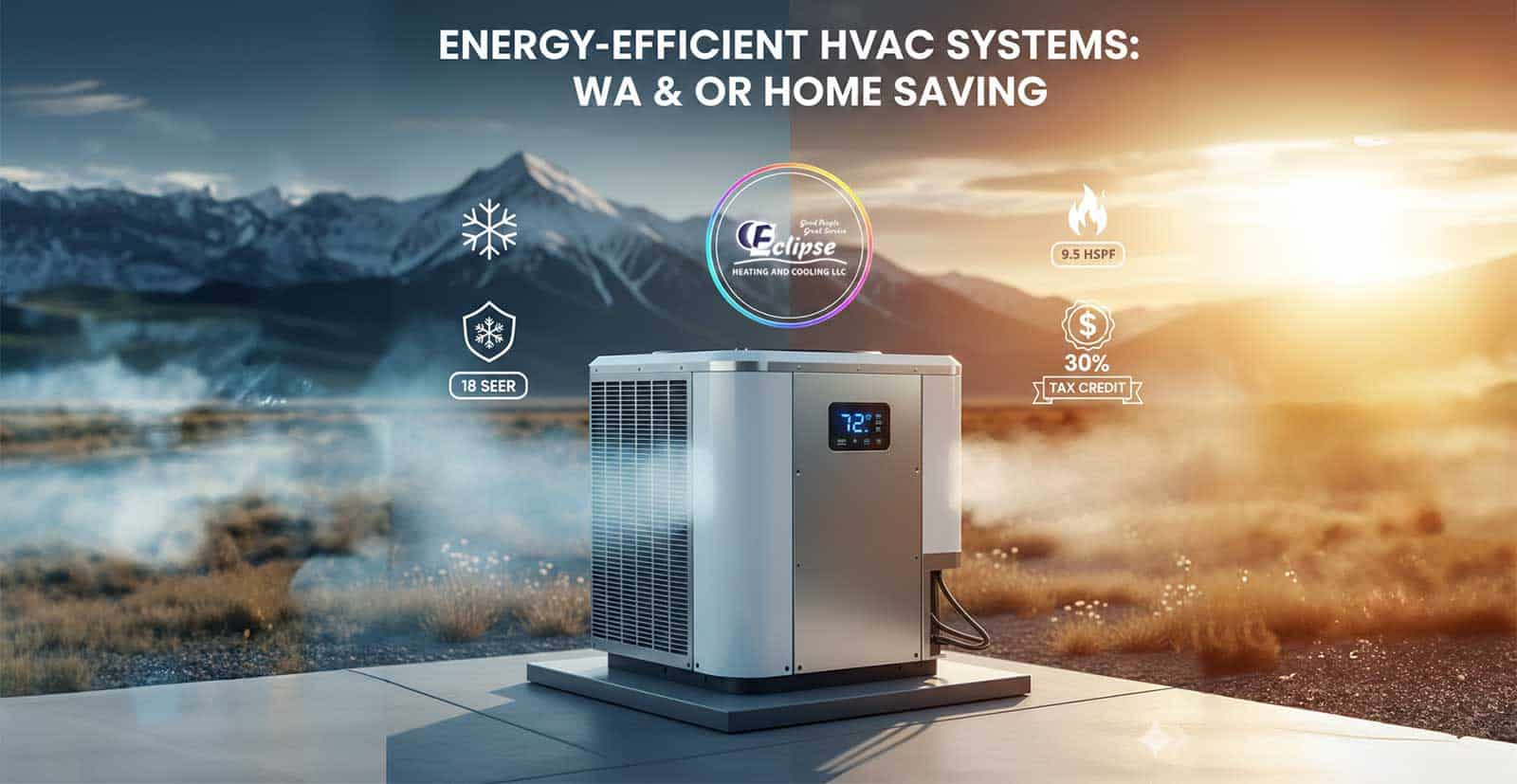
Understanding SEER, AFUE, and HSPF: Choosing Energy-Efficient HVAC Systems
When replacing your heating or cooling system in Eastern Washington or Eastern Oregon, the “Efficiency Rating” is more than just a sticker on the unit; it’s a preview of your future utility bills. With our region’s extreme temperature swings, choosing the right parameters is the difference between a smart investment and overpaying for features you don’t need.
At Eclipse Heating and Cooling, we believe an informed homeowner is a happy one. Here is the breakdown of the ratings that matter and why energy-efficient HVAC systems are the best choice for the Northwest climate.
Whether you are looking for a high-efficiency AC unit installation to beat the summer heat or a reliable heating installation to withstand our snowy Northwest winters, understanding these ratings is the first step toward making a smart, long-term investment for your home.
Why HVAC Efficiency Is More Important Than Ever
Your HVAC system accounts for a large portion of your home’s energy use. Older systems often waste energy, cost more to operate, and don’t meet today’s efficiency standards.
Upgrading to a high-efficiency system can help you:
Understanding efficiency ratings is the first step toward making a smart investment.
1. SEER: The “Miles Per Gallon” of Cooling
SEER (Seasonal Energy Efficiency Ratio) measures how much cooling a system puts out for every unit of electricity it consumes over a typical season.
2. Variable-Speed Technology: The Climate Game Changer
Standard energy-efficient HVAC systems are often either “All On” or “All Off.” This is like driving a car that only goes 0 mph or 100 mph.
Variable-Speed (Inverter) systems change the game for Eastern Washington and Oregon:
3. AFUE: Winter Efficiency
AFUE (Annual Fuel Utilization Efficiency) applies to furnaces and measures how efficiently fuel is converted into usable heat.
High-AFUE furnaces are a cornerstone of an energy-efficient HVAC system, especially during long heating seasons in Eastern Washington and Oregon.

4. What Is HSPF (and HSPF2)?
HSPF (Heating Seasonal Performance Factor) measures heating efficiency for heat pumps. Because we spend more time heating than cooling in our region, a high HSPF is often the most important factor for long-term savings.
Like SEER2, HSPF2 reflects updated DOE testing standards, ensuring newer heat pumps meet stricter efficiency benchmarks.
The Role of ENERGY STAR® & Regulations
An ENERGY STAR® certified system has been third-party verified to exceed federal minimums. Installing energy-efficient HVAC systems with this label helps ensure you meet current DOE federal conservation standards, which are designed to reduce national energy consumption.
Incentives and Rebates in WA & OR
One of the biggest advantages of installing energy-efficient HVAC systems is the immediate reduction in “sticker price” through local and federal incentives.
FAQs: Is a Higher Rating Always Worth It?
Ready to Upgrade Your Home Comfort?
Don’t guess which rating you need. At Eclipse Heating and Cooling, we’ve served the Northwest for over a decade. We perform a full load calculation on your home to ensure you get the exact efficiency you need, done right the first time.
Contact Eclipse Heating and Cooling Today for a FREE Consultation]