

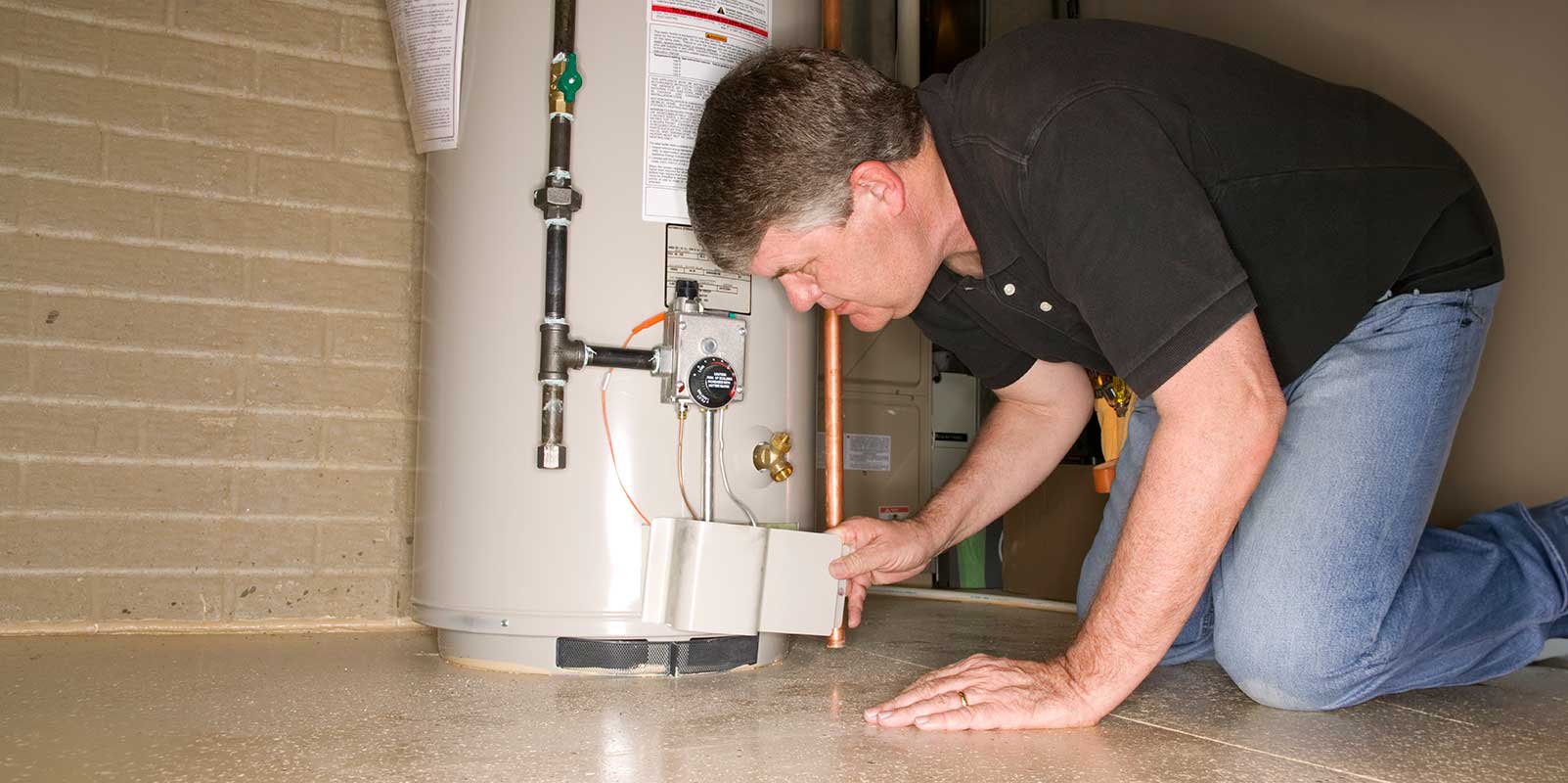
How to Flush a Water Heater: A Tri-Cities Homeowner’s Guide
Your water heater works quietly behind the scenes, delivering hot water for showers, laundry, dishes, and everyday household tasks. But something you cannot easily see may be collecting inside the tank: sediment from dissolved minerals and other particles in your water supply.
Over time, that buildup can cause odd noises, slower heating, and reduced performance.
For homeowners in Kennewick, Richland, Pasco, and surrounding Columbia Basin communities, knowing how to flush a water heater is key to preventing sediment-related problems.
But is flushing your water heater a safe DIY project? How often should you do it? What happens if your tank already has years of mineral deposits?
Let’s look at what homeowners can safely handle and when professional service is the better choice.
Why Does Hard Water Cause Sediment Accumulation in Water Heaters?
Hard water contains dissolved minerals, primarily calcium and magnesium. When water is heated, some of these minerals can form solid deposits that collect on internal surfaces or settle at the bottom of a storage tank.
Sediment can also include particles naturally present in the water supply.
As these deposits accumulate, they may:
Flushing removes loose sediment from the bottom of a storage tank. However, it does not necessarily remove hardened mineral scale attached to heating elements or other internal surfaces.
Is Hard Water a Problem in the Tri-Cities?
Water hardness varies across Kennewick, Richland, and Pasco, and it may vary within communities depending on the water source.
For example, the City of Richland’s published water-quality report lists finished water from its Columbia River treatment plant at approximately 70.6 mg/L, or 4.12 grains per gallon.
According to the U.S. Geological Survey, that falls within the moderately hard classification.
Other water sources and nearby communities may have different mineral concentrations. Homes supplied by private wells may also have different water characteristics than those on municipal systems.
You can learn more about hardness classifications from the U.S. Geological Survey’s water hardness guide.
Local homeowner tip: If you notice white mineral deposits on faucets, showerheads, or glassware, check your water utility’s report or test your water hardness. These deposits may also indicate that scale-forming minerals are reaching your water heater.
5 Signs Your Water Heater May Need Flushing
Sediment can build up gradually, so homeowners often miss the early signs.
1. Popping, Rumbling, or Crackling Sounds
As water heats around sediment at the bottom of the tank, it may produce unusual sounds.
Occasional expansion noises are normal, but persistent rumbling or popping calls for attention.
2. Hot Water Runs Out Faster Than Before
Heavy sediment can interfere with heating performance.
However, a declining hot-water supply can also result from a failing heating element, thermostat problems, or other issues. Flushing will not solve every hot-water problem.
3. Water Takes Longer to Heat
If your household’s hot-water recovery time has increased, mineral buildup may be one contributing factor.
4. Cloudy or Discolored Hot Water
Some sediment can make water appear cloudy or contain visible particles.
Rust-colored water, persistent discoloration, or an unusual odor should be investigated rather than automatically attributed to scale deposits.
5. Your Tank Hasn’t Been Flushed in Years
Even if your water heater appears to be working normally, years without flushing can let sediment build up.
If you don’t know when the tank was last serviced, consider having a professional inspect it before opening the drain valve.
How to Flush a Water Heater: The Basic DIY Process
Flushing a conventional storage-tank water heater means draining the tank and rinsing out loose sediment.
Some manufacturers offer homeowner instructions for this procedure. However, the steps vary depending on whether your water heater uses gas, electricity, or a heat pump, and on the specific model.
Important safety note: Water inside a storage tank can cause serious burns. Improperly restoring power to an empty electric water heater can damage heating elements. Incorrect handling of gas controls, valves, or electrical connections can also create hazards.
Only attempt a DIY flush if your manufacturer’s manual permits homeowner servicing and you can safely follow its instructions.
Step 1: Identify Your Water Heater and Review the Manual
Before beginning, locate the manufacturer’s name and model number.
Check the instructions for:
Some manufacturers recommend a partial flush, while others describe a full-tank draining procedure.
Do not assume that instructions for a gas water heater also apply to an electric or hybrid model.
Step 2: Shut Down the Heating System
Follow the manufacturer’s procedure to turn off the heating source.
Electric water heaters typically require disconnecting power at the appropriate breaker or disconnect.
Gas water heaters require following the specified gas-control procedure. Never disconnect or modify a gas line for DIY flushing.
Allow the water to cool as the manufacturer directs before draining.
Step 3: Prepare a Safe Drainage Location
A typical tank water heater has a drain valve near its base.
Depending on the model, the flushing procedure may involve connecting an appropriately rated hose and directing the water to a suitable drain.
Make sure the discharge area can handle the water volume and temperature without causing burns, flooding, or property damage.
If the drain valve is corroded, damaged, or leaking, stop and contact a professional.
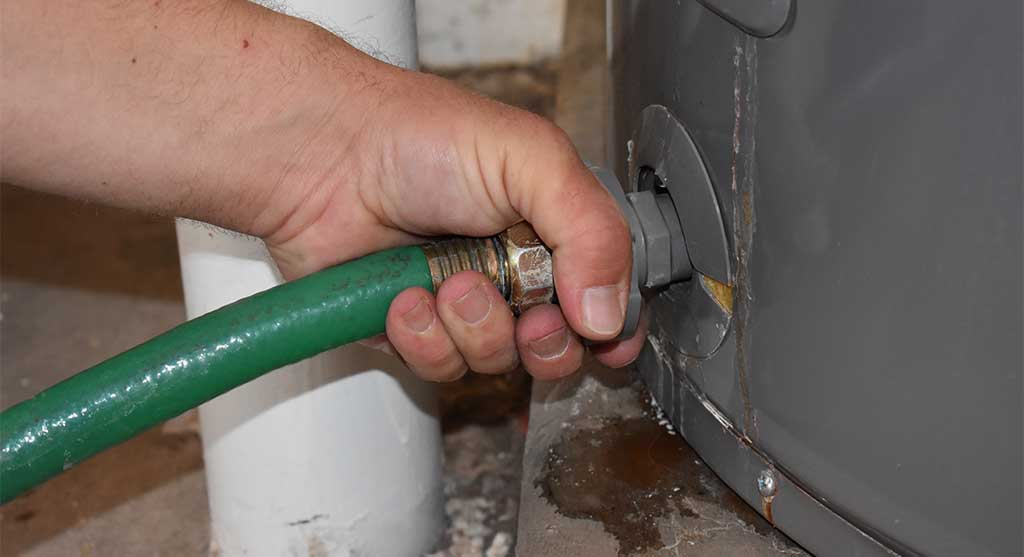
Step 4: Drain and Flush According to the Manufacturer’s Instructions
The manufacturer’s procedure explains how to isolate the cold-water supply, operate the drain valve, and drain or flush the tank.
Sediment may make the discharged water appear cloudy or contain small particles.
Do not force a blocked valve, insert objects into the tank, or use household chemicals to remove stubborn mineral deposits.
Never improvise with the temperature-and-pressure relief valve to drain or vent the tank. Operate that valve only when specifically directed by the manufacturer and when you understand the safety precautions.
Step 5: Refill the Tank Before Restoring Heat
After flushing, follow the manufacturer’s instructions to close the drain valve, restore the water supply, remove trapped air, and confirm that the tank is full.
Inspect the drain valve and surrounding connections for leaks.
For an electric water heater, never restore electrical power until the tank is fully refilled and the heating elements are submerged.
If you encounter a leak, abnormal noise, or difficulty restoring operation, stop and contact a qualified technician.
How Often Should You Flush Your Water Heater?
For many conventional storage-tank water heaters, once a year is a reasonable starting point. Still, the right interval depends on the manufacturer, your water quality, and how much sediment actually accumulates.
Some manufacturers recommend more frequent flushing.
For example, Rheem’s homeowner guidance discusses annual flushing for typical households, while individual equipment manuals may specify a different schedule.
Homes with higher mineral concentrations, heavy hot-water use, or recurring sediment problems may need more frequent attention.
Your water heater’s age and service history matter, too.
A relatively new tank with regular service differs greatly from a 12-year-old water heater that has never been flushed.
A practical approach for Tri-Cities homeowners: Check your manufacturer’s recommendations, review your water hardness, and have a technician evaluate the tank if you are unsure how much sediment has accumulated.
When Is Expert Water Heater Flushing the Better Choice?
DIY flushing may be appropriate for some accessible, well-maintained storage tanks. However, DIY flushing can create more problems than it solves.
Consider professional service if:
A qualified technician can assess the heater’s condition and determine whether flushing is appropriate or whether another problem needs to be addressed.
What Does a Professional Water Heater Flush Include?
Professional service can go beyond draining sediment.
At Eclipse Heating & Cooling, our water heater service includes inspections and performance checks tailored to your equipment.
Depending on the system and its condition, this may involve:
These additional checks can help identify developing issues that flushing alone would not reveal.
Learn more about our professional water heater maintenance services for homeowners in Eastern Washington and Eastern Oregon.
Do Tankless Water Heaters Need Flushing, Too?
Yes, but the procedure is different.
Traditional storage-tank water heaters collect sediment at the bottom of the tank.
Tankless systems can develop mineral scale inside their heat exchangers and water passages. These deposits may restrict water flow and reduce heating performance.
Tankless descaling typically requires specialized connections, manufacturer-approved cleaning solutions, and a controlled circulation procedure.
Because cleaning requirements vary by brand and model, follow the manufacturer’s service instructions.
Do not use the storage-tank flushing procedure on a tankless water heater.
Can You Prevent Hard-Water Buildup Completely?
Flushing helps control sediment, but it does not change the mineral content of the water entering your home.
A few preventive measures can help:
If your water is consistently hard, a properly selected water-softening or scale-control system may reduce certain types of scale accumulation. However, different technologies perform differently, so choose water treatment based on your actual water conditions.
Remember, flushing is preventive care, not a fix for every water heater problem.
A leaking tank, failing heating element, defective thermostat, or malfunctioning safety component requires proper diagnosis.
Keep Hot Water Flowing in the Columbia Basin
Hard-water minerals and sediment can take a toll on your water heater over time, but small preventive steps can help you recognize problems before they become major inconveniences.
Whether you live in Kennewick, Richland, Pasco, Hermiston, or another nearby Columbia Basin community, knowing when to flush your water heater and when to leave the work to a professional can make a real difference.
Since 2015, Eclipse Heating & Cooling has helped homeowners across Eastern Washington and Eastern Oregon keep their heating, cooling, and water-heating systems operating reliably.
Not sure when you last flushed your water heater?
Contact us to schedule a professional inspection with Eclipse Heating & Cooling. We’ll evaluate your system, look for sediment-related problems, and recommend the appropriate next steps.