

AC Not Cooling? Common AC Problems & When to Call for AC Repair
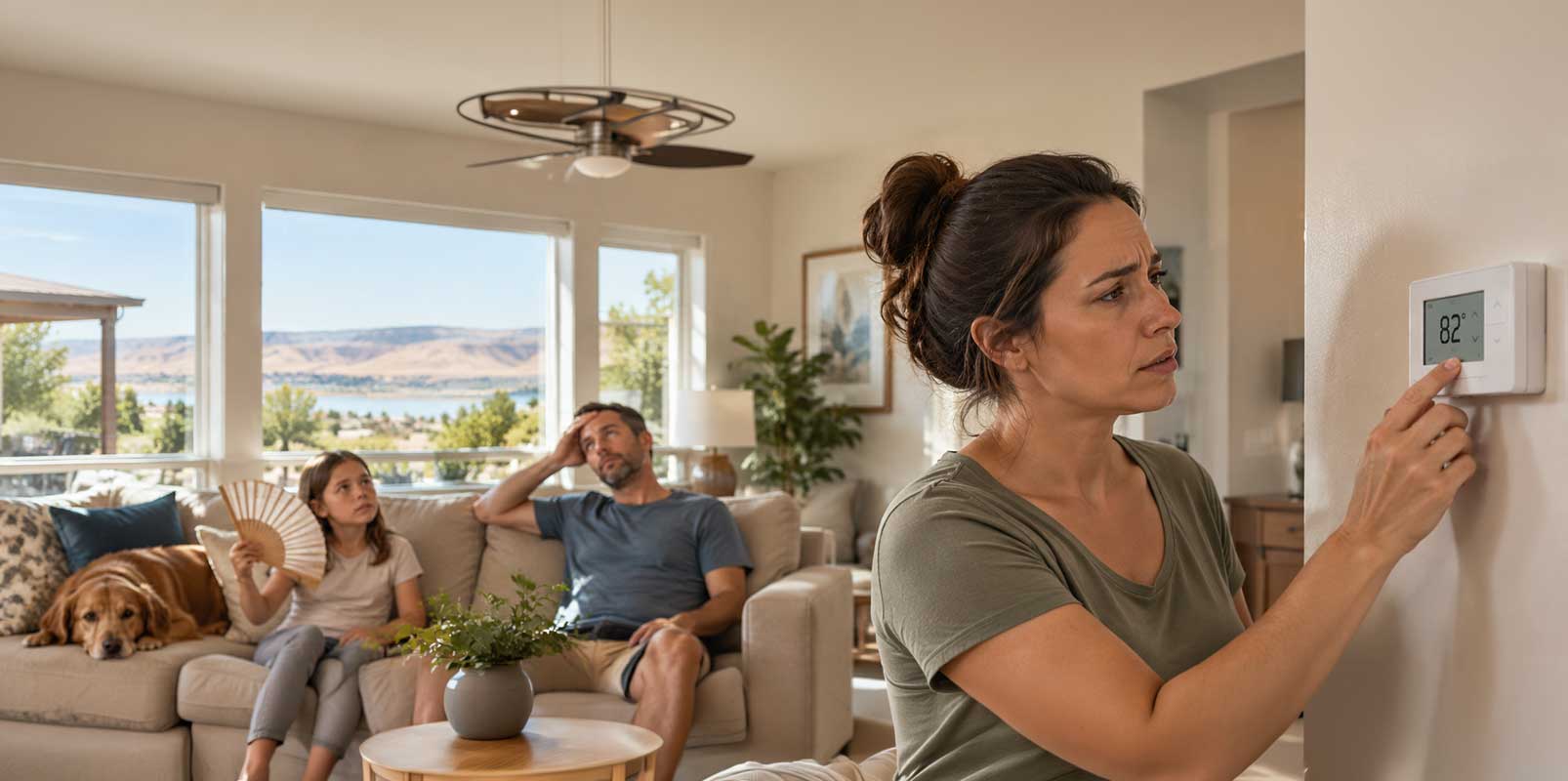
When your AC is not cooling, you usually notice the problem before you know what’s causing it. Maybe the system is running, but the house keeps getting warmer. Maybe barely any air comes from the vents, or the air that does doesn’t feel cold.
During a hot Eastern Washington summer, those symptoms can quickly turn from an inconvenience into a comfort problem.
The good news is that an AC that’s not cooling doesn’t always mean the entire system has failed. Sometimes the cause is relatively simple. Other problems require professional diagnosis and repair. Knowing what to check and when to stop troubleshooting and call an HVAC technician can help you respond before the problem gets worse.
Why Is My AC Running but Not Cooling?
If your AC is running but not cooling, the system may be unable to move enough heat out of your home. Restricted airflow, a dirty filter, thermostat problems, frozen coils, refrigerant issues, electrical problems, or failing equipment can all produce similar symptoms.
That’s why how your AC behaves can offer useful clues.
For example, an AC that runs continuously but produces cool air may have a different problem from a system blowing warm air or one that repeatedly starts and stops.
Before assuming you need a major repair, you can safely check a few simple things.
What Should I Check If My AC Is Not Cooling?
Start with the basics:
If those basic checks don’t restore cooling, the next step is professional diagnosis rather than experimenting with electrical components, refrigerant, or internal HVAC equipment.
What Are the Most Common Signs Your AC Needs Repair?
Different AC problems can produce remarkably similar symptoms. Instead of trying to diagnose individual components yourself, pay attention to what your cooling system is or isn’t doing.
AC Is Blowing Warm Air
If the system is running but warm or room-temperature air is coming from the vents, first confirm that the thermostat is set correctly.
If the settings are correct and the air still isn’t cooling, the system may have an airflow, refrigerant, electrical, or equipment problem. A technician can test the system and determine why it isn’t removing heat properly.
Airflow From the Vents Is Weak
Does the air feel cool but barely come out of the vents?
Start by checking the filter and making sure vents aren’t blocked. If airflow remains unusually weak, the problem may involve the blower, ductwork, indoor coil, or another part of the system.
Poor airflow also makes your AC work longer to achieve the temperature you’ve selected.
AC Runs Constantly but the House Keeps Getting Warmer
An air conditioner will naturally run longer during very hot weather. What isn’t normal is an AC that runs continuously while the indoor temperature continues climbing.
That suggests the system isn’t keeping up with cooling demand.
The cause could range from restricted airflow or dirty equipment to refrigerant or mechanical problems. An older or improperly sized system may also struggle during periods of high cooling demand.
AC Keeps Turning On and Off
Frequent starting and stopping, often called short cycling, can prevent your home from cooling properly and place unnecessary strain on the system.
A dirty filter, thermostat issue, frozen coil, electrical problem, or other system malfunction may be responsible. Because repeated cycling can increase wear on HVAC equipment, you shouldn’t ignore it.
Ice Is Forming on the AC
Ice on refrigerant lines or indoor cooling components isn’t a sign that your AC is producing “extra cold” air. It indicates that something isn’t working correctly.
Restricted airflow and refrigerant-related problems are among the possible causes.
If you notice ice, turn the cooling system off and schedule professional service. Continuing to operate a frozen system can make the problem worse.
Water Is Leaking Around the Indoor Unit
Your air conditioner removes moisture from indoor air as it cools. That moisture normally drains safely away from the equipment.
Water pooling around the indoor unit can indicate a drainage problem, a frozen coil, or another issue that needs attention.
Because leaking water can damage surrounding materials, it’s better to investigate promptly rather than wait to see if it disappears.
The Outdoor AC Unit Isn’t Running
Sometimes the indoor blower operates even though the outdoor portion of the cooling system isn’t working. The result can feel like an AC that’s running but blowing warm air.
After checking the thermostat and breaker, professional diagnosis is the safest next step. Outdoor AC equipment contains high-voltage electrical components and isn’t appropriate for DIY troubleshooting.
AC Is Making a New or Unusual Noise
You know what your air conditioner normally sounds like.
Grinding, banging, buzzing, rattling, screeching, or other new noises can indicate anything from a loose part to an electrical or mechanical problem.
Turning the system off and having the cause diagnosed early may help prevent additional damage.
Is My AC Broken or Is Eastern Washington Heat Making It Work Harder?
Not necessarily. Longer AC cycles can be normal during periods of intense summer heat, particularly during the hottest part of the afternoon.
Eastern Washington’s hot, dry summers can put cooling systems under sustained demand. Around the Tri-Cities and surrounding communities, outdoor equipment may also face dust, windblown debris, agricultural particles, and periods of wildfire smoke.
These conditions can dirty filters and HVAC components, making proper airflow and routine maintenance especially important.
The key is to look at the result your AC is producing.
If the system runs longer on a very hot afternoon but your home remains reasonably comfortable, it may simply be responding to a heavy cooling load.
If your AC is running but not cooling the house, the indoor temperature keeps rising, airflow has become weak, warm air is coming from the vents, or you notice ice, leaking water, unusual noises, or repeated cycling, it’s time to investigate further.
Should I Turn Off My AC If It Isn’t Cooling?
Turn the AC off if you see ice, smell burning, hear severe mechanical noises, experience repeated breaker trips, or suspect an electrical problem.
If the system isn’t cooling well, check the thermostat, filter, vents, and outdoor unit first. If those basic checks don’t reveal the problem, professional diagnosis can help determine whether continuing to run the system could cause additional damage.
Repeatedly restarting an AC or resetting a breaker isn’t a substitute for finding the underlying problem.
When Does an AC Problem Need Emergency Repair?
Some cooling problems can wait for a scheduled appointment. Others deserve immediate attention.
Consider calling for emergency HVAC service if:
Eclipse Heating & Cooling provides 24/7 emergency HVAC availability for homeowners throughout its Eastern Washington service area, including the Tri-Cities.
Is It Better to Repair or Replace an AC That’s Not Cooling?
An AC that isn’t cooling doesn’t automatically need to be replaced.
For many systems, a professional repair can restore reliable cooling. When equipment is older or has experienced repeated failures, however, compare the cost and expected life of another repair with the benefits of replacement.
A technician should consider factors such as:
The goal shouldn’t be to replace equipment simply because it needs a repair. It should be to determine which option makes the most practical sense for the system and homeowner.
When replacement is the better long-term solution, Eclipse Heating & Cooling can help homeowners explore energy-efficient equipment, available rebates, and financing options.
Can AC Maintenance Help Prevent Cooling Problems?
Regular maintenance can identify developing AC problems before they cause a loss of cooling.
During professional maintenance, a technician can inspect system operation, check important components, evaluate airflow and cooling performance, and identify conditions that may contribute to breakdowns.
That’s particularly valuable before Eastern Washington’s hottest weather arrives, when a minor problem can become much more noticeable under sustained cooling demand.
Eclipse Heating & Cooling offers the Eclipse Comfort Club, a biannual HVAC maintenance plan designed to help homeowners keep their heating and cooling systems operating reliably and efficiently.
AC Repair for the Tri-Cities and Eastern Washington
When your AC isn’t cooling, guessing at the problem wastes time; and replacing parts without proper diagnosis wastes money.
Since 2015, Eclipse Heating & Cooling has provided heating, cooling, indoor air quality, and water heater services throughout Eastern Washington and Eastern Oregon. Based in Richland, WA, the company serves homeowners throughout the Tri-Cities and surrounding areas with highly trained, experienced technicians.
Customers can expect:
If your AC is running but your home isn’t getting cooler, don’t wait for a minor problem to become a complete breakdown. Contact Eclipse Heating & Cooling to schedule AC repair in Eastern Washington.